




Quick answer: if your grey, white or silver hair is turning yellow, toning isn't always the whole answer. A lot of the time the yellowing is heat damage from hairdryers, straighteners and curling tongs, alongside sun, pollution and hard water. So the fix is two-part: protect grey hair from heat with a heat protectant such as Heat Protection Shield, and use a violet toning shampoo such as Anti-yellow Shampoo once or twice a week to neutralise the yellow that's already there.
Grey and white hair can be stunning, bright and silvery, until it starts to look yellow, dull or nicotine-tinged. The natural instinct is to reach for a toner. But according to Insight's Head of Education, that's often treating the symptom rather than the cause.
"Lots of women with grey and white hair think their hair is yellowing and it needs toning, but what's really happening is that it's going yellow through heat damage."
Lorraine Matic, Head of Insight UK Education
Why does grey hair turn yellow?
White and grey hair has little or no pigment, so anything that changes or stains the hair shows up straight away. The main causes are:
- Heat damage. Hot tools can scorch light, unpigmented hair and leave a yellow cast, especially on the lengths you straighten or curl most. This is the one most people miss.
- Sun. UV exposure can yellow and dull light hair over the summer. See sun protection for hair.
- Pollution and smoke. Everyday exposure can leave a dull, yellowish film.
- Hard water and build-up. Minerals and styling-product residue sit on the hair and dull it.
Step 1: protect grey hair from heat
If heat is the cause, toning will only ever be a temporary cover-up. Stop the yellowing at the source:
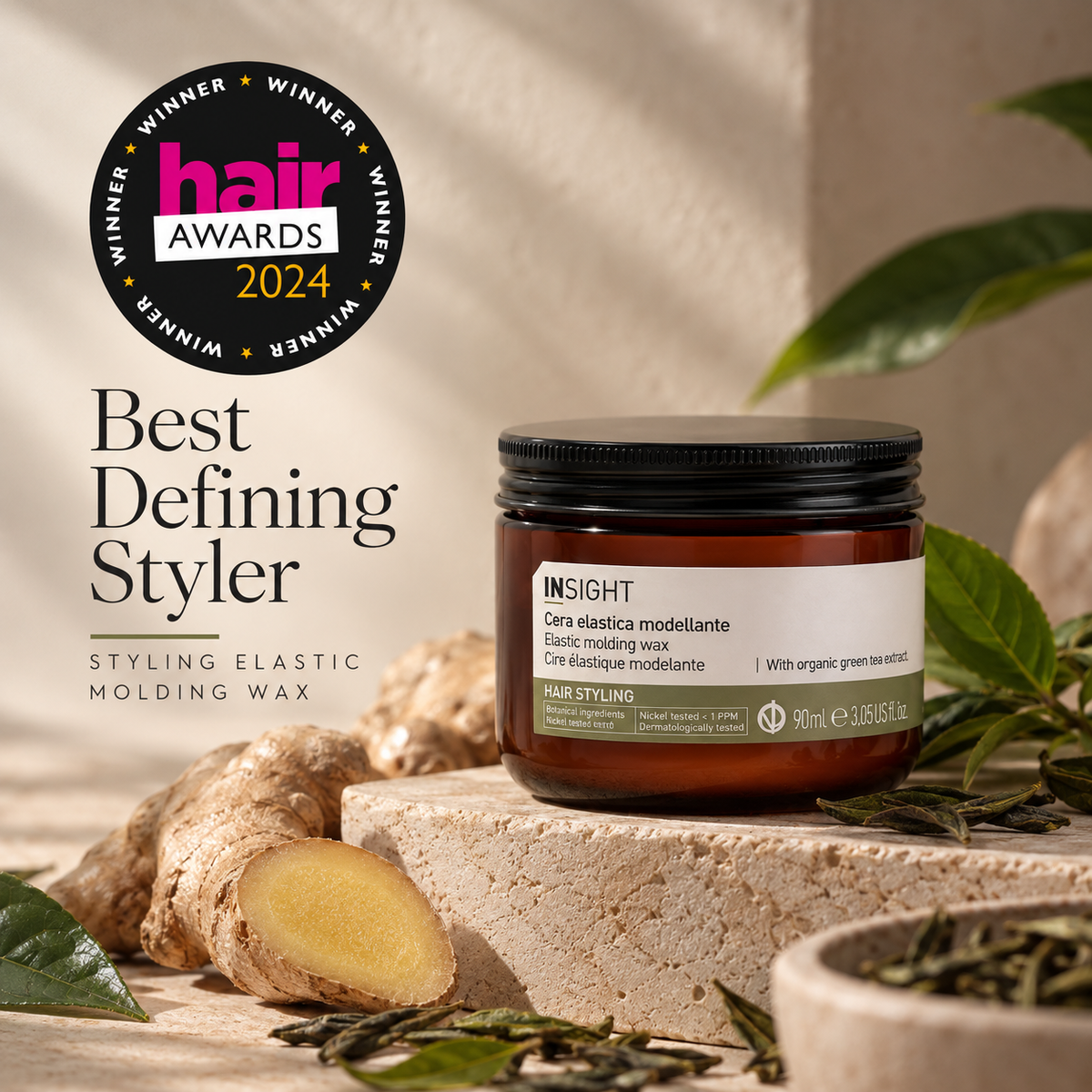
- Use a heat protectant every time. Heat Protection Shield forms an invisible protective layer to help prevent damage from hairdryers, straighteners and curling tongs. Spray it over damp, towel-dried hair and comb through before you style.
- Turn the temperature down. Fine, light hair rarely needs the highest setting. Our heat protectant guide covers straightener temperatures.
- Don't go over the same section again and again, and keep straighteners moving.
- Give hair heat-free days where you can, and let it air-dry part of the way before blow-drying.
Step 2: tone away the yellow that's there
Once you've protected your hair, a violet toning shampoo neutralises the yellow cast you can already see. Violet sits opposite yellow on the colour wheel, so a small amount cancels it out and brings back bright, cool, silvery reflections.
Anti-yellow Shampoo is Insight's toning shampoo for grey, white and silver hair, natural or coloured. It has a violet toning pigment with organic chamomile, organic lemon and saffron extracts. Vegan and cruelty-free.
How to use it
- Apply to damp hair and massage gently, paying particular attention to the most yellow areas.
- Leave on for 2 to 3 minutes.
- Rinse thoroughly, then condition.
- Use once or twice a week in place of your usual shampoo, not every wash. Overusing a toner can leave very white hair with a faint lilac tint.
Blending blonde into grey
If you've been colouring or highlighting blonde and want to grow into your natural grey, the warm blonde pieces can look yellow sitting next to the grey. Insight's tip from the salon floor: tone the blonde with Rich Silver, the silver shade of Enhancing Color Pigments, so it blends into your grey instead of standing out. For a softer tone, mix it with the Direct Pigments Hair Mask, and swatch it first. More in silver hair dye.
Toner vs silver shampoo vs silver dye
- Toning or silver shampoo (such as Anti-yellow Shampoo): gently neutralises yellow as you wash. Best for regular upkeep.
- Salon toner: a stronger, one-off tone applied by your colourist, useful if yellowing is heavy.
- Silver hair dye: a semi-permanent pigment such as Rich Silver deposits more colour for a stronger, metallic silver finish on white or very light hair.
None of these covers grey. If you want to colour grey hairs darker, that needs permanent colour, ideally from a colourist. If you're embracing your grey, read going grey gracefully.
Keeping grey hair bright between washes
- Clarify now and then. If build-up or hard water is dulling your hair, a clarifying wash every week or two helps toner work better; see what is clarifying shampoo.
- Condition well. Grey hair can feel drier and coarser; a weekly mask keeps it soft and shiny. See the best hair mask for dry, damaged hair.
- Protect from the sun with a hat in strong sunshine.
Frequently asked questions
Why is my white hair turning yellow?
Most often heat from styling tools, plus sun, pollution, smoke and hard water. Protect from heat first, then tone.
Does purple shampoo work on grey hair?
Yes. A violet toning shampoo neutralises yellow on grey, white and silver hair. Insight's choice for grey hair is Anti-yellow Shampoo; for blonde hair, use Cold Reflections Brightening Shampoo.
How often should I use toner on grey hair?
Once or twice a week. Using it every wash can leave white hair with a lilac tint.
Can heat really turn grey hair yellow?
Yes. Light, unpigmented hair shows heat damage as a yellow cast, which is why heat protection is the first step.
Will toner cover my grey?
No. Toner brightens and neutralises grey hair; it doesn't colour it darker. For coverage, see a colourist.
About the author
Charlotte Read has spent six years in the hair industry with Insight Professional and holds a First Class BSc in Business Management and Marketing. She writes with reference to real salons across social media and the wider Insight community, and draws on the Insight office team, who between them bring over 100 years of combined experience on salon floors.
Where technical expertise is needed, Charlotte consults Lorraine Matic, Head of Insight UK Education, who brings over 38 years of global experience in colour, technique and hair science.