



If you've ever sat scrolling through hair inspiration trying to work out whether you want balayage or highlights — or whether they're secretly the same thing — you're not alone. The two get used interchangeably all the time, but they're genuinely different techniques that give different results, need different upkeep, and suit different hair.
Here's a clear, no-jargon guide to how each one works, what sets them apart, and how to choose between them.
What is balayage?
Balayage comes from the French word for "to sweep", and that's exactly what it is: colour painted on freehand, by hand, straight onto the surface of the hair. Your colourist sweeps lightener through the mid-lengths and ends, concentrating it where the sun would naturally lift your hair and leaving the roots softer.
Because it's painted rather than packed into foils, balayage gives a soft, graduated, lived-in finish. The colour melts from darker at the root to lighter at the ends, with no hard line. As your hair grows, there's no obvious regrowth band — it just keeps looking intentional.
Best known for: a natural, sun-kissed, low-maintenance look.
What are highlights?
Highlights are sections of hair that are woven out, saturated with lightener, and usually wrapped in foil (or sometimes a meche) so the colour can develop with more lift and precision. Because each piece is fully coated from root to tip, highlights are more uniform and more defined than balayage.
That precision means you can go lighter and brighter, and you get an even pattern of lift throughout. The trade-off is that, because the colour starts right at the root, you'll see regrowth more clearly as your hair grows out.
Best known for: brightness, contrast, and a more all-over lifted look.
Balayage vs highlights: the key differences
The simplest way to think about it:
- Application — balayage is painted on the surface freehand; highlights are sectioned and foiled from the root.
- Finish — balayage is soft and graduated; highlights are more uniform and defined.
- Maintenance — balayage grows out softly and can stretch four to five months between appointments; highlights show regrowth sooner, so most people top up every six to ten weeks.
- Lift — highlights generally achieve more lightness and brightness; balayage keeps things more natural.
- Placement — balayage is concentrated through the ends; highlights run from root to tip.
Neither is "better" — they're just suited to different goals and different lifestyles.
Which is right for you?
Choose balayage if you want a natural, grown-out look, you'd rather not be in the salon every couple of months, and you like the idea of colour that fades gracefully rather than needing constant correction.
Choose highlights if you want noticeable brightness, a more even or bold result, you're covering a larger amount of hair, or you like a crisper, more "done" finish and don't mind the upkeep.
Still torn? Many colourists now blend the two — using foils where you want brightness around the face and balayage through the rest for softness. It's worth bringing photos of both to your consultation.
Balayage and highlights on dark hair
If you've got dark brown or black hair, both techniques work — but expect the process to take more care. Lifting dark hair to a lighter shade can take longer and may need more than one session to reach your goal without compromising the condition of your hair.
On dark hair, balayage tends to read as warm, caramel or toffee tones melting through the ends, while highlights give more visible, defined streaks of lift. Whichever you choose, dark hair that's been lightened needs proper aftercare to stay glossy rather than turning dry or brassy — which brings us to the most important part.
How to keep your colour looking its best
Whether you go for balayage or highlights, lightened hair is more porous and more prone to dryness and brassiness. The colour you pay for lasts far longer with the right routine at home:
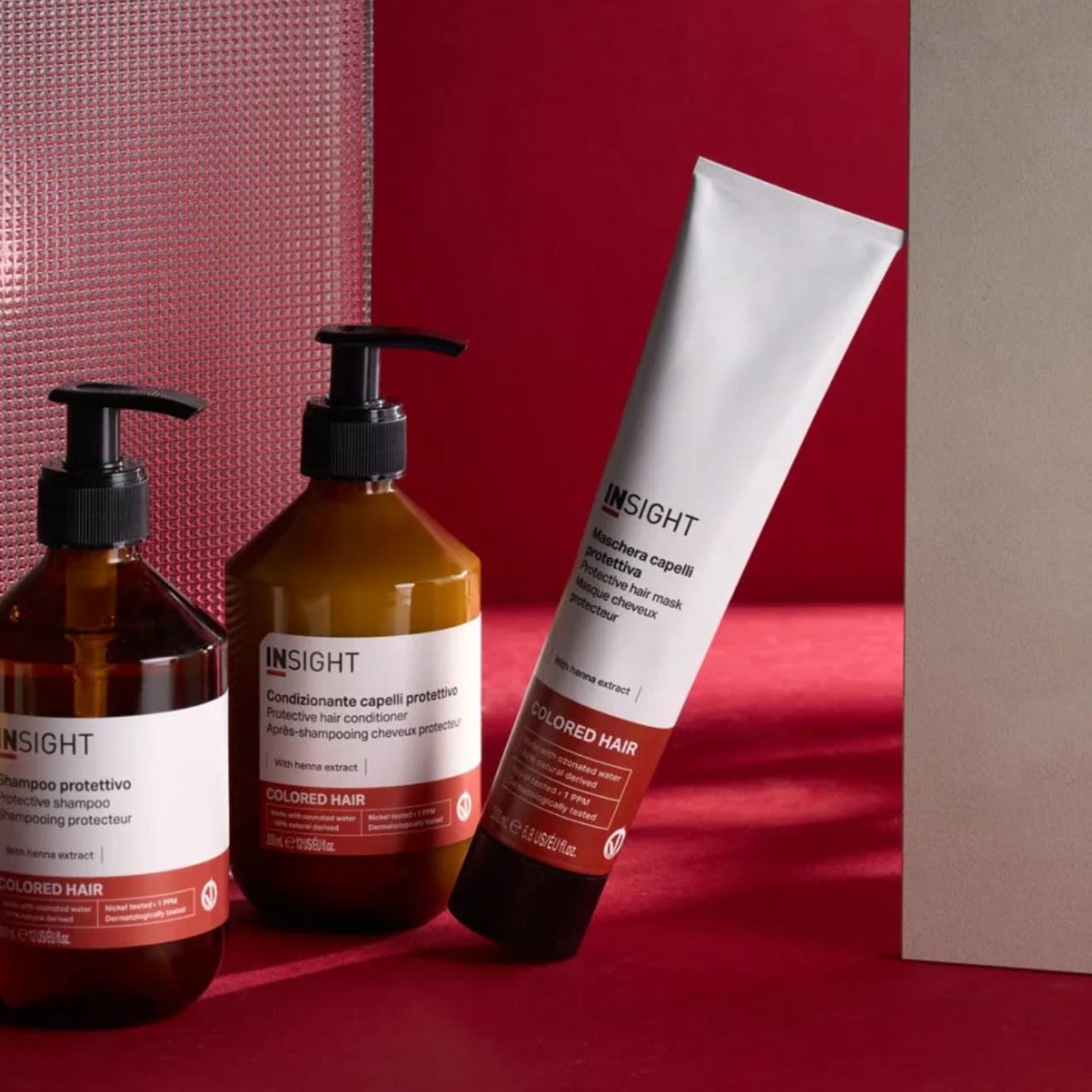
- Switch to colour-protecting care. Insight's vegan Protective Shampoo and Protective Hair Conditioner — with henna extract, mango butter and organic macadamia oil — gently cleanse and nourish colour-treated and highlighted hair to keep tone true and slow the fade.
- Add a weekly mask to replace moisture in lightened ends. The Protective Hair Mask is the colour-care match; if your hair is over-processed and fragile, reach for the repair-focused Restructurizing Hair Mask instead. (See also: How Often Should You Use a Hair Mask?)
- Tone out brassiness when warmth creeps in between salon visits. Insight's vegan Anti-yellow Shampoo is a violet-toned cleanser that lifts unwanted yellow from blonde, white or grey hair, while the Blonde range — Cold Reflections Brightening Shampoo and Cold Reflections Hair Mask — brightens and keeps cool blondes crisp with organic chestnut extract. (More in: What Do Toners Do for Your Hair?)
- Protect against heat, then add shine. Lightened hair is more heat-sensitive, so spray Insight's vegan Heat Protection Shield onto damp or dry hair before blow-drying or using hot tools, then finish with a gloss product like Liquid Crystals or Oil Non Oil for shine and frizz control.
If your hair already feels dry or over-processed from previous colour, start with repair first — explore the vegan Damaged Hair range.
Frequently asked questions
Is balayage or highlights more damaging? Both involve lightener, so both can stress the hair if it's pushed too far. Balayage often uses less product overall and avoids the root, so it can be gentler — but condition depends far more on how much lift you're asking for and your aftercare than on the technique itself.
Which lasts longer between appointments? Balayage, generally. Because it grows out softly with no harsh regrowth line, many people stretch it to four or five months. Highlights usually need refreshing every six to ten weeks.
Can you get balayage on short hair? Yes. It's most dramatic on mid-length to long hair, but a skilled colourist can paint balayage onto a bob or even shorter to add depth and dimension.
Which is more expensive? It varies by salon and how much hair is being coloured, but balayage is often priced as a premium freehand service, while highlights are typically charged by the number of foils. Your colourist can quote based on your length and goal.
Balayage or highlights, the result is only as good as the care behind it. Keep your new colour looking salon-fresh for longer with Insight's vegan Colour Care range.
About the author
Charlotte Read has spent six years in the hair industry with Insight Professional and holds a First Class BSc in Business Management and Marketing. She writes with reference to real salons across social media and the wider Insight community, and draws on the Insight office team, who between them bring over 100 years of combined experience on salon floors.
Where technical expertise is needed, Charlotte consults Lorraine Matic, Head of Insight UK Education, who brings over 38 years of global experience in colour, technique and hair science.